
The 7 Benefits of Predictive Analytics for Manufacturer Reps
Manufacturer reps deal with long sales cycles, multiple product lines, and bid processes that can take months to close. You’re tracking quotes across territories, managing commission splits, and trying to figure out which opportunities are worth the effort. Predictive analytics changes that. Instead of guessing which bids will close or relying on gut feel about pricing, you get data-driven answers. Not perfect answers, nothing is, but better ones. Here’s what predictive analytics actually does for rep firms, without the usual sales pitch.

What Predictive Analytics Actually Means
Predictive analytics uses historical data to forecast what’s likely to happen next. It’s not a crystal ball. It’s pattern recognition at scale. The system looks at your past quotes, win rates, customer behavior, and market conditions. It finds patterns you wouldn’t spot manually. Then it tells you which bids are worth pursuing, which customers are likely to churn, and where pricing should land.
For manufacturer reps, that means fewer wasted quotes and more accurate forecasts. Leadership gets visibility without chasing reps for updates. Reps focus on opportunities that actually close.

Why Predictive Analytics Matters for Rep Firms
1. Stop Wasting Time on Dead-End Quotes
Not every RFQ is worth quoting. Some projects never move forward. Some customers are fishing for pricing with no intent to buy. Some bids are already wired for a competitor. Predictive analytics scores opportunities based on past behavior. Which customers actually buy after requesting quotes? Which project types close? Which territories convert? You stop burning hours on quotes that won’t close. Your team focuses on real opportunities.
2. Get Pricing Right Without Guesswork
Pricing manufacturer rep quotes is part art, part science. Too high and you lose the bid. Too low and you leave margin on the table. Predictive analytics analyzes past wins and losses at different price points. It factors in customer history, project type, and competitive pressure. You see where pricing should land to win while protecting margin. This doesn’t replace judgment. It informs it.
3. Predict Which Bids Will Actually Close
Sales forecasts based on rep gut feel are unreliable. Predictive analytics scores every opportunity based on actual close probability, not optimism. ROM’s AccuIntelligence, for example, predicts bid outcomes with 96.1% accuracy. That’s not magic. It’s historical data applied to current opportunities. Leadership sees pipeline reality instead of wishful thinking.
4. Identify Customers About to Churn
Losing a long-term customer costs more than just that account. It’s lost referrals, lost territory credibility, and months of relationship-building gone. Predictive analytics flags at-risk customers before they leave. Changing order patterns, declining engagement, longer payment cycles, these signals get missed in day-to-day chaos. Analytics catches them.
You can intervene early. Fix the problem. Keep the relationship.
5. Find Revenue Hidden in Existing Accounts
Your best growth opportunities are often sitting in current customer accounts. Predictive analytics identifies which customers are likely to buy additional product lines based on their buying patterns and project types. Instead of cold outreach, you’re targeting warm accounts with relevant offers. Higher conversion, less effort.
6. Optimize Territory and Resource Allocation
Which territories are underperforming? Which reps are crushing it, and why? Where should you add headcount or reallocate coverage? Predictive analytics answers these questions with data instead of assumptions. You see which territories have untapped potential and which are saturated. Resource decisions get easier.
7. Reduce Operational Costs
Predictive analytics cuts costs in places you might not expect. Better demand forecasting means less emergency shipping. Accurate pipeline visibility means better cash flow planning. Smarter quoting means fewer revision cycles. These aren’t huge line items individually. Collectively, they add up.

Real Applications for Manufacturer Reps
- Quoting and Sales Process: Predictive analytics transforms how rep firms quote. Historical win/loss data informs pricing strategy. Customer behavior patterns reveal which prospects are serious. Bid scores help prioritize workload. The result: fewer quotes, higher win rates, better margins.
- Commission and Margin Tracking: Commission disputes happen when calculations aren’t transparent or data doesn’t match expectations. Predictive analytics connects quotes to orders to payments automatically. Reps see projected commission in real time. Finance reconciles faster. Leadership gets margin visibility across manufacturers without building manual reports.
- Demand Forecasting: Accurate demand forecasting matters when managing inventory, coordinating with manufacturers, and planning staffing. Predictive analytics looks at historical sales patterns, seasonal trends, and market conditions to forecast future demand. You avoid stockouts and overstocking. Manufacturers trust your forecasts. Operations run smoother.

Industry-Specific Benefits
HVAC Manufacturer Reps
HVAC reps manage seasonal demand swings, long specification cycles, and complex bid processes. Predictive analytics helps forecast seasonal demand spikes, predict equipment replacement cycles, and identify which commercial projects are likely to close. Service scheduling becomes proactive instead of reactive. You predict when equipment will need replacement based on usage patterns and age, allowing reps to reach out before failures happen.
Electrical and Lighting Reps
Lighting reps deal with rapidly changing energy efficiency standards and evolving customer preferences. Predictive analytics forecasts demand for LED retrofits, predicts which commercial accounts will upgrade lighting systems, and identifies opportunities for energy-efficient solutions. Supply chain optimization improves. You predict component demand and adjust inventory before shortages happen.

Challenges Worth Knowing
Predictive analytics isn’t plug-and-play. There are real challenges. Most vendors won’t tell you this up front, but implementation takes work. Your data needs to be clean. Your team needs to understand what the predictions mean. And the system has to actually integrate with how you operate, not the other way around. Here’s what you’ll actually deal with.
Data Quality Issues
Predictive models are only as good as the data feeding them. Inconsistent data entry, incomplete records, and siloed information create problems. Garbage in, garbage out. Fixing this requires cleaning historical data and maintaining standards going forward. It’s not glamorous work, but it’s necessary.
Interpreting Results
Analytics tools generate predictions. Turning predictions into action requires judgment. A 70% close probability doesn’t mean “definitely quote this.” It means “this is more likely to close than opportunities scored at 40%.” Leadership needs to understand what the numbers mean and how to act on them.
Integration with Existing Systems
Standalone analytics tools don’t help if they can’t pull data from your quoting system, order management platform, and CRM. Integration matters. Look for analytics built into your core platform or tools with robust API connections. ROM’s AccuIntelligence, for instance, sits inside the same system handling quotes and orders, no separate login, no data sync issues.

Overcoming the Challenges
Invest in Data Hygiene
Make data accuracy part of your process. Train reps on consistent data entry. Clean up historical records. Set standards and stick to them. This isn’t a one-time project. It’s an ongoing discipline.
Partner with Vendors Who Understand Rep Workflows
Generic analytics tools don’t understand manufacturer rep operations. They don’t know how territory splits work, how multi-line commission gets calculated, or how specification influence affects close rates. Work with vendors who built their analytics specifically for rep firms. The models will be pre-trained on relevant data. The insights will actually apply to your business.
Build Internal Analytics Literacy
Your team doesn’t need to become data scientists. But they should understand what predictive scores mean, how to interpret forecasts, and when to trust the system versus their judgment. Training doesn’t have to be formal. It can be as simple as walking through how the system scored recent wins and losses, showing why certain predictions were accurate.
The Future: AI and Machine Learning
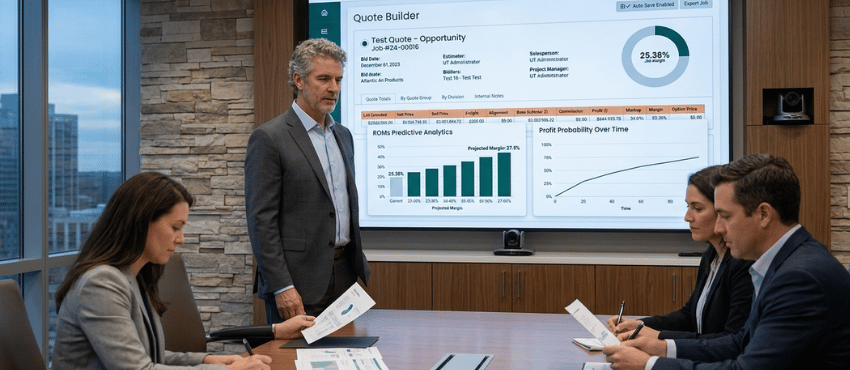
Predictive analytics is evolving. AI and machine learning are making predictions faster and more accurate. Models learn from new data automatically. Insights get sharper over time. For manufacturer reps, this means better bid scoring, more accurate forecasting, and recommendations that improve as your business grows. The system doesn’t just report what happened, it suggests what to do next.

What This Means for Your Firm
Predictive analytics isn’t a nice-to-have anymore. Rep firms using data to prioritize bids, optimize pricing, and forecast accurately are winning. Firms relying on gut feel and spreadsheets are falling behind. The gap will widen. If you’re evaluating predictive analytics, focus on tools built for manufacturer reps. Generic analytics platforms won’t understand your workflows. Purpose-built solutions will.
ROM’s AccuIntelligence is one example, it’s designed specifically for how rep firms quote, track orders, and manage commissions. But the principle applies regardless of vendor: make sure the tool understands your business model. Predictive analytics won’t solve every problem. It won’t replace good judgment or strong relationships. But it will make your team faster, smarter, and more profitable.
That’s worth paying attention to.
FAQs
Predictive analytics uses historical data and statistical models to forecast future outcomes. For manufacturer reps, this means predicting which bids will close, which customers might churn, and where pricing should land to win deals while protecting margin.
Key benefits include better bid prioritization, more accurate pricing, improved win rates, early churn detection, optimized resource allocation, and reduced operational costs. The core value is making faster, smarter decisions based on data instead of guesswork.
Main challenges include ensuring data quality, interpreting results correctly, and integrating analytics with existing systems. These aren’t insurmountable, but they require attention. Clean data and proper training make a big difference.
HVAC reps use predictive analytics to forecast seasonal demand, predict equipment replacement cycles, optimize service scheduling, and identify which commercial projects are likely to close. It helps manage the seasonal swings and long sales cycles common in HVAC.
No. Purpose-built analytics platforms for manufacturer reps (like ROM’s AccuIntelligence) are designed for sales leadership and reps to use directly. You don’t need to write code or build models. The system handles the technical work. You focus on acting on the insights.