
Consistency in Quoting: A Man Reps Guide to Standardized Quotes
As sales organizations grow, maintaining a high level of consistency becomes increasingly difficult without structure, clear rules, and shared systems. For many organizations, quoting evolves organically. Reps build quotes the way they were taught. Exceptions pile up. Discounts get negotiated in inboxes and spreadsheets. Over time, pricing discipline erodes, and the business feels the impact.

Why Consistency in Quoting Matters
Inconsistent quoting creates operational risk that compounds as sales volume grows. When pricing decisions vary by rep, region, or deal size, the business loses visibility and control.
Consistent quoting delivers clear business outcomes:
- Protects margin: Standardized pricing and enforced discount thresholds prevent unnecessary margin erosion and pricing giveaways.
- Improves pricing accuracy: Quotes built from approved rules reduce errors, rework, and downstream corrections by finance and operations.
- Speeds up deal cycles: Clear rules and automated approvals eliminate delays caused by manual reviews and last-minute fixes.
- Builds customer trust: Customers receive predictable, fair pricing, reducing confusion when similar deals are quoted differently.
- Reduces internal friction: Sales, finance, and operations operate from the same rules, not competing interpretations.
Consistency turns quoting from a reactive, manual task into a controlled, repeatable process.
Where Inconsistency Enters the Quoting Process
Most quoting issues don’t come from bad intent; they come from process gaps.
Common sources of inconsistency include:
- Pricing stored in spreadsheets, as studies have found 94% of business spreadsheets have critical errors
- Unclear or unenforced discount thresholds
- Manual approvals handled over email or chat
- Different tools are used by different teams
- Exceptions made without documentation or visibility
As these gaps accumulate, it becomes impossible to answer basic questions like:
- Why was this deal discounted?
- Was this price approved?
- Are we quoting similar customers consistently?

How Consistency Impacts Pricing Accuracy, Discounts, and Customer Trust
Pricing Accuracy
When pricing rules are centralized and applied automatically, every quote starts from the same approved foundation. This reduces errors caused by outdated price lists, incorrect product configurations, or manual calculations.
Discount Control
Consistent quoting enforces clear discount limits and approval paths. Reps know what they can offer, when approvals are required, and who needs to sign off, removing guesswork and back-channel negotiations.
Customer Trust
Customers notice pricing inconsistencies. When two similar deals receive different prices without explanation, confidence erodes. Consistent quoting reinforces fairness, professionalism, and credibility at every stage of the sales process.
What a Consistent Quoting Process Looks Like
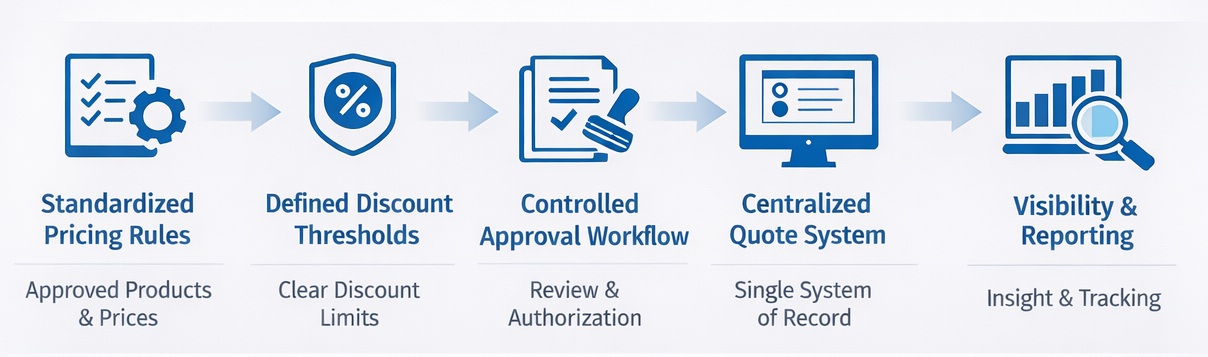
A consistent quoting process doesn’t rely on memory or individual judgment; it relies on structure. At a high level, it includes:
- Standardized pricing rules: Approved prices, bundles, and terms are applied automatically.
- Defined discount thresholds: Clear limits that trigger approvals when exceeded.
- Controlled approval workflows: Finance and operations review exceptions in a structured, auditable way.
- Centralized quote generation: One system of record for quotes, pricing logic, and approvals.
- Visibility and reporting: Insight into discounting patterns, approval trends, and margin impact.
This structure ensures every quote meets business requirements before it reaches the customer.
How ROM’s CRM and Quoting Software Solves This for Manufacturers’ Reps
Manufacturers’ reps face a unique quoting challenge. They manage multiple principals, each with different pricing rules, discount structures, and approval requirements, often across thousands of SKUs. Without the right systems, consistency is almost impossible to maintain. ROM’s CRM and quoting software is built specifically to address this complexity.
Centralized Pricing Across Principals
ROM enables manufacturers’ reps to manage pricing rules across multiple manufacturers in a single system. Each principal’s pricing, terms, and discount guidelines are defined and enforced at the point of quote creation, eliminating guesswork and outdated price lists.
Reps don’t have to remember rules. The system applies them automatically. ROM enforces discount thresholds based on each manufacturer’s requirements. Pricing is built in, so no need for emails, spreadsheets, or manual follow-ups for approvals.
This ensures:
- Discounts are applied consistently
- Margins are protected across every principal
One System of Record for Quotes and Customer Activity
By combining CRM and quoting in a single platform, ROM ensures quotes are always tied to the customer, opportunity, and history. This gives reps, managers, and manufacturers full visibility into:
- Who quoted what
- At what price
- At what margin
- Did we win or lose
No more disconnected systems or lost context.
Faster Quotes Without Sacrificing Control
Consistency doesn’t have to slow sales down. ROM automates pricing logic and approvals so reps can generate accurate, compliant quotes quickly, while operations and manufacturers retain control.
The result is a quoting process that scales without breaking.
How to Move Toward Consistent Quoting
Improving consistency in quoting starts with clear rules and visibility. Teams should first confirm that pricing rules are documented, discount thresholds are enforced, and all quotes are created in a single system. Finance and operations must also be able to review and audit approvals without relying on email or spreadsheets.
Once those basics are in place, the focus should be on reducing manual steps, removing undocumented exceptions, and aligning sales, finance, and operations around shared pricing and approval standards. This approach makes quoting more predictable, easier to scale, and simpler to control as volume increases.
Final Thoughts
Consistency in quoting isn’t about slowing sales down. It’s about removing friction, protecting margin, and delivering a professional, trustworthy experience to customers and principals alike. As organizations grow, consistent quoting becomes less of an optimization and more of a requirement for sustainable revenue.
See Where Your Quoting Process Breaks Down
Most teams don’t realize how inconsistent their quoting really is until they see the data. ROM helps manufacturers’ reps identify pricing gaps, approval bottlenecks, and margin leakage hidden inside their quoting process. Get clarity on where inconsistency is costing you revenue. Request a quoting process assessment